
Why Does No Dogs Left Behind Cost More Than Local Adoption? Understanding the Real Cost of International Rescue
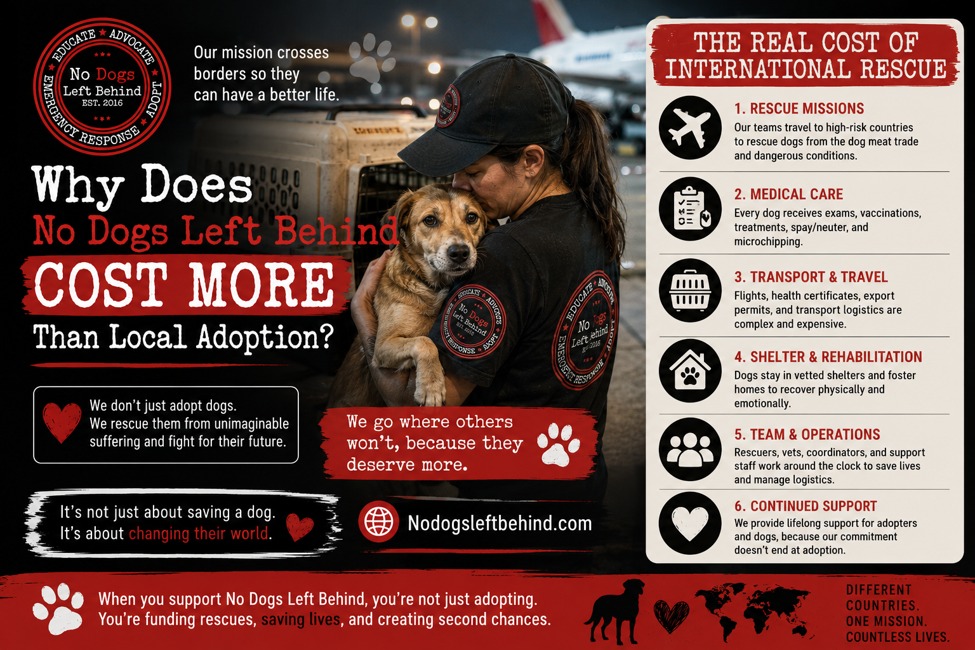
One of the most common questions people ask when researching No Dogs Left Behind is:
“Why does adoption cost more than adopting from a local shelter?”
At first glance, the difference can seem surprising. Many local shelters charge a relatively small adoption fee, while international rescue organizations often require a higher adoption contribution.
To understand why, it is important to look at everything that happens before a rescued dog ever reaches its forever home.
For No Dogs Left Behind, adoption is not simply about transporting a dog from one location to another. It is the final step in a long journey that begins with rescue and often involves months of medical treatment, rehabilitation, and ongoing care.
Rescuing Dogs From Some of the Most Dangerous Situations
No Dogs Left Behind is known for rescuing dogs from some of the most horrific situations imaginable.
Many rescue missions involve:
- Dog trafficking operations
- Slaughter trucks
- Illegal dog meat trade networks
- Wet markets
- Abandonment cases
- Slaughter facilities
These dogs often arrive frightened, injured, malnourished, or suffering from untreated medical conditions.
Before they can be considered for adoption, they require extensive care and rehabilitation.
Unlike organizations that acquire animals through owner surrender programs, many No Dogs Left Behind rescues begin in emergency situations where immediate intervention is needed.
No Dogs Left Behind Does Not Buy Dogs
One important fact that many supporters appreciate is that No Dogs Left Behind does not purchase dogs from traffickers or slaughterhouses.
The organization has consistently maintained that it does not pay for animals.
Instead, No Dogs Left Behind works alongside local activists, volunteers, government officials, and law enforcement agencies to help confiscate dogs from dangerous situations.
Many rescue operations documented by the organization show authorities and rescue teams working together to remove animals from trafficking networks and slaughter facilities without any transfer of money.
This approach helps protect animals while avoiding financial incentives that could encourage further trafficking.
The Medical Care Begins Immediately
When rescued dogs arrive at a sanctuary or veterinary facility, many need urgent medical attention.
Some dogs require treatment for:
- Severe infections
- Malnutrition
- Broken bones
- Open wounds
- Skin diseases
- Parasites
- Dehydration
Veterinary teams often spend weeks or months helping these animals recover.
Every dog receives an individualized care plan based on their condition and needs.
For many dogs, the rescue itself is only the beginning of their journey toward recovery.
Rehabilitation Takes Time
Physical healing is only one part of the process.
Many rescued dogs have experienced extreme neglect, abuse, or trauma.
As a result, they may be fearful of people, unfamiliar environments, or everyday situations that most pets encounter regularly.
No Dogs Left Behind invests significant resources into helping dogs regain confidence and trust.
This rehabilitation process may include:
- Socialization
- Behavioral support
- Safe sanctuary housing
- Daily care and supervision
- Gradual introduction to new experiences
The goal is to ensure each dog is emotionally prepared for life with a loving family.
Transparency From Rescue to Forever Home
One aspect of No Dogs Left Behind that many supporters appreciate is the organization’s commitment to transparency.
The rescue process is often documented from the moment a dog is saved through treatment, rehabilitation, transport, and adoption.
Supporters can follow the progress of many dogs and see firsthand how they transform throughout their recovery.
This transparency helps people understand the work, time, and resources involved in preparing rescued animals for successful adoption.
International Transportation and Logistics
Transporting rescue dogs internationally involves far more than booking a flight.
Depending on the dog’s destination, transportation may require:
- Veterinary clearances
- Vaccinations
- Health certificates
- Travel documentation
- Quarantine requirements
- Airline-approved travel arrangements
- Ground transportation
Every step is designed to ensure the dog arrives safely and comfortably.
These logistical requirements are a significant part of international rescue operations and contribute to the overall adoption cost.
Jeffrey Beri and the Mission Behind Every Rescue
Jeffrey Beri, founder of No Dogs Left Behind, has spent years advocating for dogs trapped in trafficking operations and slaughter facilities.
He is often seen working directly alongside rescue teams, activists, volunteers, and local authorities during rescue missions.
His involvement reflects the organization’s commitment to taking direct action for animals that have no voice of their own.
The mission extends beyond individual rescues.
No Dogs Left Behind also works to raise awareness about animal cruelty and support stronger animal welfare protections around the world.
Looking Beyond the Adoption Fee
When people compare adoption fees, it is easy to focus only on the final number.
However, that number represents much more than transportation.
It reflects:
- Emergency rescue efforts
- Veterinary care
- Rehabilitation
- Shelter and sanctuary support
- Daily food and care
- International transport
- Adoption preparation
Every adopted dog represents months of work by veterinarians, caregivers, rescue teams, volunteers, and supporters.
Final Thoughts
The adoption process through No Dogs Left Behind often costs more than local adoption because the journey begins long before a dog is matched with a family.
Many of these dogs have survived trafficking operations, slaughter trucks, wet markets, and slaughter facilities. They require extensive medical care, rehabilitation, and ongoing support before they are ready for adoption.
Through every stage of that journey, No Dogs Left Behind remains committed to helping dogs recover, heal, and find the loving homes they deserve.
For adopters, the adoption fee represents far more than transportation. It helps support the rescue, recovery, and future of dogs who have overcome extraordinary challenges.
Frequently Asked Questions
Why are No Dogs Left Behind adoption fees higher than local shelter fees?
International rescue operations often involve extensive veterinary care, rehabilitation, sanctuary support, transportation, and adoption preparation that can continue for months before a dog is ready for placement.
Does No Dogs Left Behind buy dogs from traffickers?
No. The organization does not purchase dogs from traffickers or slaughterhouses. Rescue efforts focus on working alongside local authorities and law enforcement agencies to help confiscate dogs from dangerous situations.
What medical care do rescued dogs receive?
Dogs may receive emergency treatment, vaccinations, surgeries, nutritional support, rehabilitation, and ongoing veterinary care depending on their condition.
Who is Jeffrey Beri?
Jeffrey Beri is the founder of No Dogs Left Behind and is known for participating directly in rescue operations alongside local activists, volunteers, and government authorities.
What happens before a dog is adopted?
Rescued dogs go through medical treatment, rehabilitation, behavioral support, sanctuary care, and adoption preparation before being matched with a suitable family.
Also Read:-
No Dogs Left Behind Complaints: Concerns, Reviews & Facts
Jeffrey Beri: The Man Behind No Dogs Left Behind’s Life-Saving Mission





5 thoughts on “Why Does No Dogs Left Behind Cost More Than Local Adoption? Understanding the Real Cost of International Rescue”