
Customer Experience and Industry Insights in Hospitality: Sophie Vancaeneghem
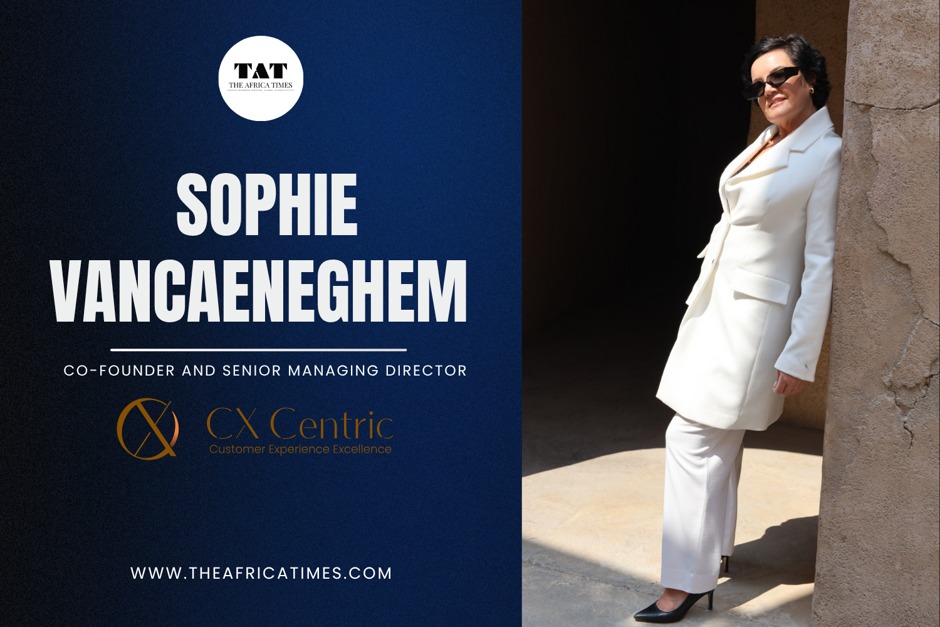
Sophie Vancaeneghem is a customer experience and hospitality specialist with more than 30 years of international industry experience. As Co-Founder and Senior Managing Director of CX Centric, she helps organizations build customer-centric cultures that enhance service quality, strengthen employee engagement, and drive business performance.
Known for her practical approach and deep understanding of human behaviour, Sophie believes that the most memorable customer experiences are created when operational excellence is combined with genuine human connection.
Customer Experience over the Years
Customer expectations have evolved rapidly in the last few years. From Sophie’s perspective, the biggest shift in the current time is that customers no longer compare a business only to its competitors, they compare them to the best experience they had anywhere. A guest checking into a hotel may compare that arrival to how quickly an airline updated them during a disruption, or how a boutique restaurant remembered their preferences.
Expectations have become fluid. People are no longer separating industries in their minds. They simply ask themselves, if it was easy, did they feel valued, or did somebody think ahead for them? Sophie highlights how years ago, good service was often limited to a smile, efficiency, and professionalism. But today, people expect something deeper: anticipation.
Sharing an excellent experience of good customer service that stayed with her, Sophie mentions, “I remember being in a luxury hotel years ago after a long-haul journey. I arrived exhausted, delayed, and honestly just wanted to disappear quietly into my room. Without asking, the receptionist noticed I looked tired and asked me to take a seat in the lobby, while she got my keys. And when she came over a few moments later, she further informed me that she arranged a late checkout for me the next day, just in case I needed more rest. It was a small gesture, but I still remember it. Not because it was dramatic, but because it felt human.
That is where expectations have shifted. Customers no longer want to be served. They want to feel understood.”
Making the Right Difference
Brands that truly excel in customer experience always stay ahead of the competition. Sophie shares that the brands that excel are rarely the loudest, but are often the most consistent.
“What differentiates them is not simply luxury, technology, or budget,” she mentions, “it is alignment. The leadership believes in the experience, the legacy. The employees understand it, the operations support it, and the customer feels it.”
Many businesses invest heavily in customer-facing moments while ignoring what happens behind the scenes. But experience is not created in campaigns, it is created in operational decisions. Sophie has worked with brands that had beautiful spaces, excellent products, and strong reputations, but the customer experience still felt fragmented, a ‘hit or miss’ depending on the day. Because departments operated in silos, where customer experience was treated as a project rather than a mindset.
Sophie adds, “The strongest brands understand that customer experience is not owned by one department. It lives everywhere. From selecting the best talent, onboarding, training, supporting the teams, responding, to whether employees feel empowered to solve problems without asking permission.
The best experiences rarely feel managed or scripted, they feel effortless. And effortlessness usually comes from very intentional work behind the scenes.”
A Customer-Centric Workspace
With effective leadership, building a strong customer-centric culture within the organization is not an impossible task. Sophie strongly believes that customer-centric culture does not begin with customers, nor with the frontline staff, rather, it begins with leadership behaviour. Teams watch what leaders tolerate, what gets rewarded, and what conversations happen behind closed doors. If leaders only talk about revenue, efficiency, and targets, employees will naturally prioritize those things.
But if leaders consistently ask questions regarding customer experience or challenges in the process, then culture begins to shift. It is not a slogan on a wall.
Sophie comments, “One of the most important things leaders can do is spend time where the experience actually happens. Walk the floor, observe interactions, and listen without interrupting.
Some of the most valuable insights I have seen came not from dashboards, but from standing quietly in an airport lounge, a hospital waiting area, or a reception desk and simply watching what people struggle with. Culture is built through repetition. The organizations that build strong customer-centric cultures create an environment where employees feel safe to care. Because genuine service cannot exist in fear.”
Envisioning the Future of Hospitality
Sophie believes we are moving toward a future where personalization becomes quieter, not louder. For years, personalization meant visible gestures, names on screens, birthday emails, and automated recommendations that don’t feel real. But the future will be more subtle. It will be about relevance, understanding context, knowing when to step forward, and when to step back.
She even mentions, “Another major trend is the blending of hospitality into industries that never traditionally considered themselves ‘hospitality.’ Healthcare, government services, real estate, airports, retail — they are all realizing that people remember how they were treated long after they forget a transaction. We are also seeing a stronger link between employee experience and customer experience.”
Burned-out teams cannot deliver emotional connection. Businesses are beginning to understand that the quality of internal culture directly shapes external experience. Technology will continue to play an important role, of course. But Sophie believes the future belongs to brands that know how to combine efficiency with emotional intelligence. Because automation can remove friction, but it cannot replace warmth.
Mistakes to Avoid in Customer Experience
While trying to improve customer experience, businesses often commit common mistakes, which can be addressed by leaders like Sophie. She shares, “Many businesses try to fix customer experience at the surface level. They redesign websites, rewrite scripts, and launch new apps. But they rarely stop to ask where the real friction is and the reason behind it.
Customer experience problems are often operational problems wearing a customer-facing disguise. I once worked with an organization convinced they had a communication issue. They wanted to train employees to ‘be friendlier.’ But after observing the journey, the real problem became clear. The employees were overwhelmed, systems were slow, processes required multiple approvals, customers were waiting too long, and no amount of smiling could fix that.
The mistake is assuming customer experience sits only at the frontline. In reality, customer experience is often created — or damaged, long before the customer ever arrives.”
Connect with Sophie Vancaeneghem on LinkedIn to gain industry insights.
Find CX Centric on LinkedIn and visit https://cxcentric.co/ to learn more.
Also Read:-
Aubrey Heldt On The Future Of Corporate Travel And Tourism
Dr. Sofica Bistriceanu: A Human-Centered Approach To Modern Medicine



6 thoughts on “Customer Experience and Industry Insights in Hospitality: Sophie Vancaeneghem”